If your business depends on raw materials, spare parts, machinery, finished goods, or warehouse inventory, managing these assets efficiently is critical to your success. However, many organizations still rely on paper registers, Excel spreadsheets, and manual approvals to track material movement. While these methods may work for small operations, they become unreliable as your business grows.
A missing material entry, an outdated inventory sheet, or an unauthorized dispatch can lead to production delays, increased costs, and unhappy customers. These issues don't just affect your warehouse—they impact your entire business.
A Material Management System (MMS) helps organizations digitize material tracking, streamline inventory processes, and maintain complete visibility over every material transaction. Whether you're managing one warehouse or multiple manufacturing units, the right system can help you reduce waste, improve accountability, and make faster business decisions.
Understanding Material Management
Material management is the process of planning, purchasing, storing, tracking, issuing, and controlling materials throughout their lifecycle. Every item that enters or leaves your organization should be recorded accurately to ensure smooth business operations.
Materials may include:
- Raw materials
- Finished goods
- Spare parts
- Machinery
- Office assets
- Packaging materials
- Maintenance tools
- Returnable equipment
When these items are tracked manually, errors become inevitable. Businesses often struggle to answer basic questions like:
- Where is the material currently located?
- Who approved its movement?
- Has the item been returned?
- What is the available stock?
- Which vendor supplied the material?
A Material Management System provides instant answers by storing all information in one centralized platform.
Why Manual Material Management Fails
Many companies believe spreadsheets are enough to manage inventory. In reality, manual systems create challenges that become more serious as operations expand.
Inventory Inaccuracies
One of the biggest problems with manual records is inaccurate inventory data. Employees may forget to update stock after issuing materials, leading to incorrect inventory levels. As a result, businesses either overstock unnecessary items or run out of critical materials during production.
Lack of Visibility
Different departments often maintain separate records. Procurement, warehouse, production, and accounts may all have different information, causing confusion and delays.
Time-Consuming Processes
Searching through registers, checking old gate passes, or comparing multiple spreadsheets wastes valuable employee time. Staff spend hours looking for information instead of focusing on productive work.
Unauthorized Material Movement
Without proper approval workflows, materials may leave the premises without authorization. This increases the risk of theft, misplaced inventory, and financial losses.
Difficult Audit Preparation
Manual documentation makes audits stressful. Collecting years of material records from paper files is slow and increases the possibility of missing information.
How a Material Management System Solves These Challenges
A modern Material Management System automates and simplifies the entire material lifecycle.
Digital Material Inward Process
Every incoming shipment is recorded with supplier details, purchase order numbers, quantities, inspection status, and receiving dates. This ensures inventory is updated immediately after materials arrive.
Controlled Material Outward Process
Whenever materials are issued or dispatched, the system records the transaction digitally. Managers can review approvals, track quantities, and maintain accountability for every movement.
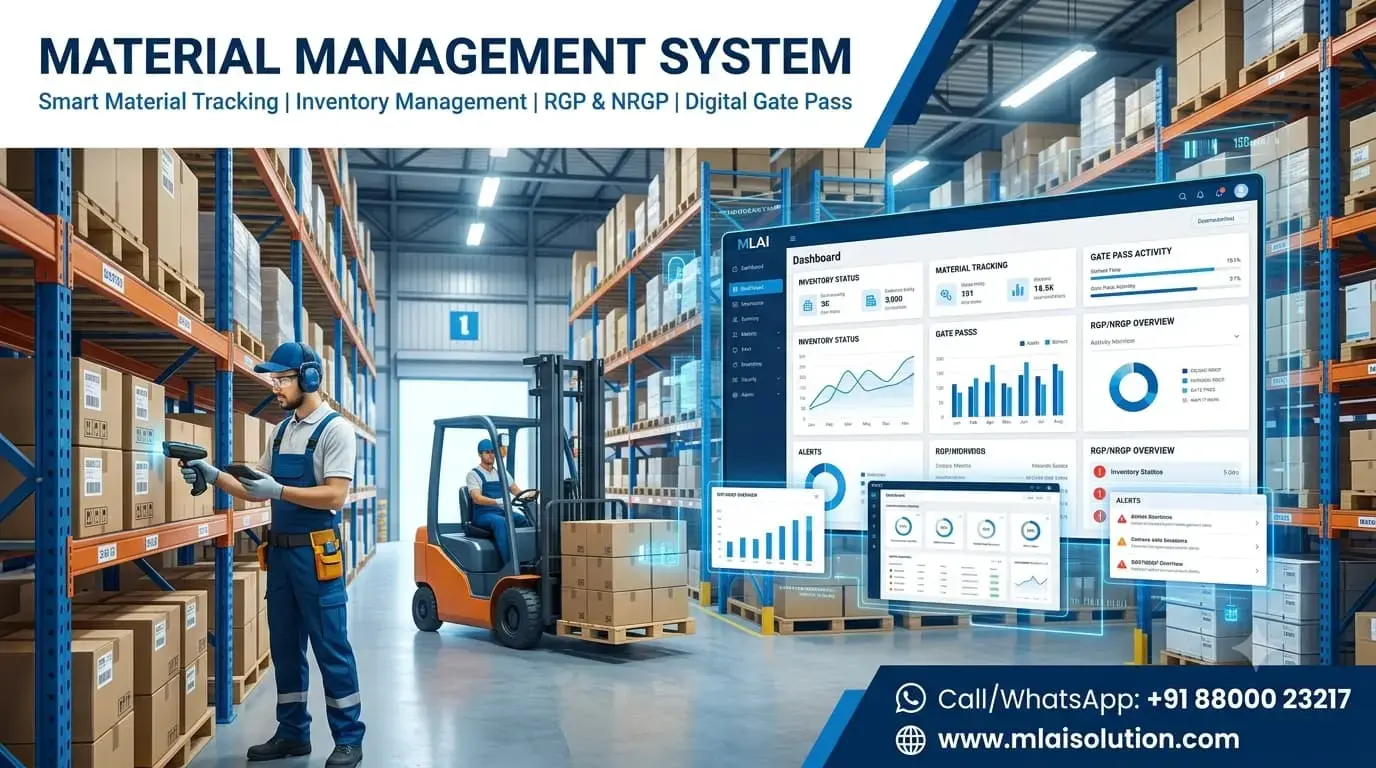
Real-Time Inventory Monitoring
Instead of relying on outdated spreadsheets, users can view current stock levels instantly. Real-time inventory helps prevent shortages, excess inventory, and unnecessary purchases.
Smart Gate Pass Management
Digital gate passes replace handwritten documents with automated approval workflows. Every gate pass is stored electronically, making it easy to search, verify, and audit whenever required.
Returnable Material Tracking
Organizations frequently send tools, equipment, or machinery to vendors or customers. A Material Management System tracks Returnable Gate Passes (RGP) and Non-Returnable Gate Passes (NRGP), ensuring valuable assets are returned on time.
Key Benefits for Businesses
Better Inventory Control
Accurate inventory data allows businesses to plan procurement more effectively and reduce stock-related issues.
Improved Productivity
Employees spend less time updating paperwork or searching for records, allowing them to focus on more important tasks.
Reduced Operational Costs
By eliminating duplicate purchases, preventing material loss, and improving inventory planning, businesses can significantly reduce operating expenses.
Stronger Security
Every material movement is linked to an authorized user, creating complete accountability and reducing the chances of unauthorized dispatches.
Faster Decision Making
Managers gain access to real-time reports and dashboards, enabling them to make informed decisions based on accurate data rather than assumptions.
Essential Features to Look For
When selecting Material Management Software, businesses should consider features such as:
- Material inward and outward management
- Inventory tracking
- Digital gate pass management
- Barcode and QR code integration
- Multi-level approval workflows
- Vendor management
- Warehouse management
- Returnable and non-returnable gate pass tracking
- Role-based user permissions
- Dashboard and MIS reports
- Cloud accessibility
- ERP integration
- Mobile-friendly interface
Choosing software with these capabilities ensures the system can grow alongside your business.
Which Industries Can Benefit?
Material Management Software is useful for almost every industry that handles inventory or physical assets.
Some of the most common industries include:
- Manufacturing
- Automotive
- Construction
- Warehousing
- Logistics
- Engineering
- Pharmaceuticals
- FMCG
- Packaging
- Textile
- Electronics
- Healthcare
- Educational Institutions
- Government Organizations
Regardless of industry, the objective remains the same—maintain complete control over materials while reducing costs and improving operational efficiency.
Why Cloud-Based Material Management Is Becoming Popular
Traditional software often requires expensive servers and local installations. Cloud-based Material Management Systems provide greater flexibility by allowing users to access data securely from any location.
Cloud solutions offer:
- Automatic data backup
- Multi-location access
- Secure login with role-based permissions
- Lower IT maintenance costs
- Easy software updates
- Better collaboration between departments
For businesses operating across multiple branches or warehouses, cloud technology provides a centralized platform that keeps everyone connected.
How to Choose the Right Material Management System
Before investing in software, evaluate your business requirements carefully.
Ask yourself:
- Can the software handle future business growth?
- Does it integrate with your existing ERP or accounting software?
- Is it easy for employees to learn?
- Can it generate detailed reports?
- Does it support barcode or QR code scanning?
- Is customer support available when needed?
- Does it provide strong security and data backup?
Selecting the right solution ensures long-term value and a higher return on investment.
Final Thoughts
Efficient material management is no longer just about maintaining stock records. It is about improving operational efficiency, reducing unnecessary expenses, increasing accountability, and delivering better customer service.
A Material Management System enables businesses to replace manual processes with automated workflows, real-time inventory tracking, and secure digital records. By giving every department access to accurate information, organizations can reduce delays, prevent inventory loss, and make faster business decisions.
As competition continues to grow, businesses that embrace digital material management will be better positioned to improve productivity, optimize resources, and achieve sustainable growth.
Ready to Modernize Your Material Management?
If you're looking for a reliable and scalable Material Management System, MLAI Solution offers a comprehensive platform designed for manufacturers, warehouses, logistics companies, and enterprises of all sizes.
📞 Call or WhatsApp: +91 88000 23217
🌐 Visit: https://mlaisolution.com/material-management-system.php
Take the first step toward smarter inventory management, streamlined material tracking, and more efficient business operations today.